RK3576 vs RK3588: Which Chip Fits Your Interactive Flat Panel?
For education & corporate IFPD buyers picking between our two mainstream Rockchip solutions, here is a clear comparison to simplify your selection.
Core Hardware Gap
CPU Architecture: RK3576 features Quad A72 + Quad A53, stable for daily basic meetings and classroom teaching. RK3588 upgrades to newer Quad A76 + Quad A55 with higher clock speed, delivering 40%–60% stronger multi-task performance. It runs multiple apps, split-screen casting, and video calls smoothly without lag.
GPU Graphics Performance: RK3576 equips Mali-G52 MC3, standard for regular 4K display output. RK3588 upgrades to Mali-G610 MC4, far superior in rendering complex charts, high-resolution streaming, and AI visual features. It handles heavy graphic loads effortlessly.
AI & Expandability: Both carry 6 TOPS NPU, but RK3588 supports richer AI peripherals: 8-mic array, 48MP camera, light/humidity sensors, and expandable RAM up to 32GB, ideal for high-end bid tender projects. RK3576 only supports max 8GB RAM for cost-sensitive bulk orders.
RK3576 vs RK3588: Side-by-Side Comparison Table
| Specification | RK3576 | RK3588 |
|---|---|---|
| CPU | Quad A72 + Quad A53 | Quad A76 + Quad A55 (higher clock speed) |
| Multi-task headroom | Everyday teaching, one or two apps at a time | 40–60% stronger multi-tasking: split-screen casting + video call without lag |
| GPU | Mali-G52 MC3 | Mali-G610 MC4 (heavy graphics, high-resolution streaming) |
| NPU (AI) | 6 TOPS | 6 TOPS |
| Max RAM | 8 GB | 32 GB (fits high-end tender specs) |
| System | Android 16 + DaisyOS | Android 15 + DaisyOS, Windows via OPS |
| Panel | 4K UHD (3840×2160) | 4K UHD (3840×2160) |
| Screen sizes (our lineup) | 65″, 75″, 86″ | 65″, 75″, 86″, 98″, 110″ |
| AI camera & mics | Optional 48 MP AI camera + 8-mic array | 48 MP AI camera + 8-array mics, 10 m pickup, AI noise reduction |
| Google EDLA | LTF series — EDLA certified | LT series — EDLA certified |
| OPS slot | 80-pin OPS slot (add Windows later) | 80-pin OPS slot (add Windows later) |
| Best for | Budget-driven classroom rollouts, standard meeting rooms, bulk government orders | High-end boardrooms, international tenders, AI video & multi-app multitasking |
| Cost position | Entry level — lowest cost per classroom | Premium — pays back on demanding AI workloads |
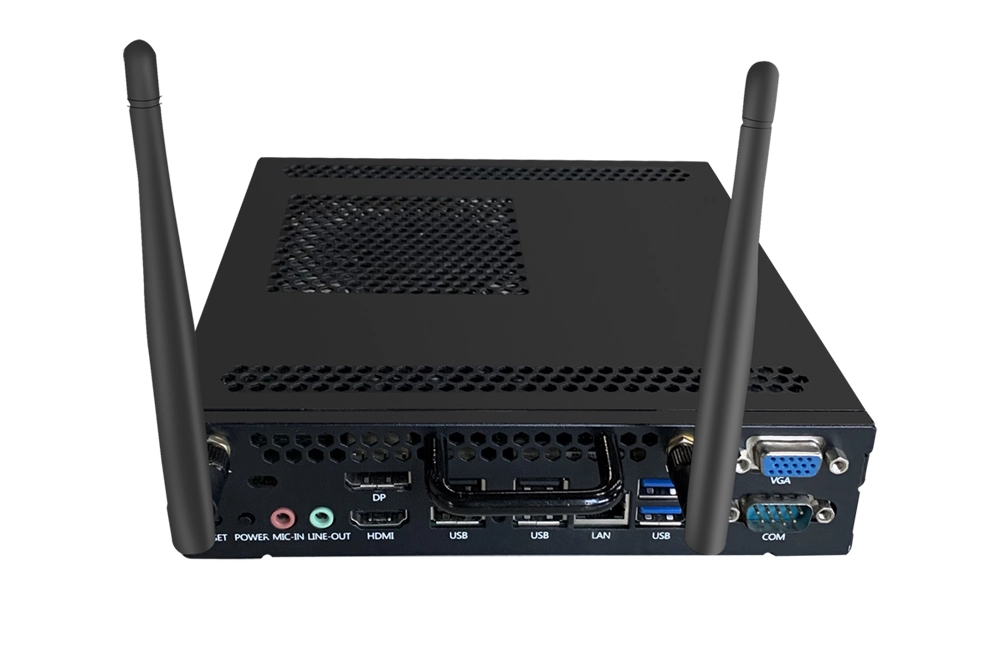
Both boards run our own DaisyOS AI ecosystem and both accept the same 80-pin OPS module, stands and accessories — so switching between models never changes installation, training or after-sales routines.
How to Choose in 3 Questions
- How many apps and video calls run at the same time? A single lesson with screen sharing runs comfortably on the RK3576. Split-screen casting, video conferencing plus AI camera tracking is where the RK3588's extra multi-task headroom shows.
- Does the project spec ask for 98″/110″, 32 GB RAM or heavy AI video? If yes, go straight to the RK3588 — it is the platform that meets those thresholds without custom work.
- Is the deciding factor cost per classroom at volume? For multi-room rollouts and budget-limited public tenders, the RK3576 delivers the same 4K UHD, 40-point touch and EDLA software at an entry-level position.
Still unsure? Send us the room list, expected concurrency and the tender thresholds — we compare both configurations against your project and recommend the cheaper one that still passes spec.
RK3576 vs RK3588 FAQ
Which is faster, RK3576 or RK3588?
RK3588. It uses newer Cortex-A76 + A55 cores with a higher clock and delivers 40–60% more multi-task performance than the RK3576's A72 + A53 combination.
Do both deliver the same AI performance?
Both carry a 6 TOPS NPU, so on-device AI features such as the UMind AI whiteboard run on either. The difference is expandability: the RK3588 supports up to 32 GB RAM and richer AI peripherals (8-mic array, 48 MP camera, sensors).
Can I add Windows later?
Yes. Both models have an 80-pin OPS slot, so a Windows OPS module can be added at purchase or later without replacing the panel.
What is the maximum RAM for each model?
RK3576: 8 GB. RK3588: 32 GB.
Is the RK3576 enough for a school?
For standard classroom teaching, interactive lessons and wireless screen sharing, yes. Choose the RK3588 when teachers run AI video, several apps at once, or when the school wants the longest service headroom.
Which one should I quote for a government tender?
Match the tender's minimum thresholds first: if it specifies 98″/110″ panels, 32 GB RAM or advanced AI video, quote the RK3588; if it only requires 4K UHD, multi-touch and DaisyOS software, the RK3576 fits at a lower entry position.
Shared Standard Specs (All Our 65–110 Inch IFPD)
- 4K UHD 16:9 panel, 450 nits optional brightness, 40-point infrared touch
- Built-in 80-pin OPS slot, full-platform wireless screen sharing
- ≤0.5W standby power, 3-year global warranty, complete standard accessories
Suitable Scenarios
Choose RK3576: Small training rooms, low-budget government bulk purchases, basic daily teaching to cut procurement costs.
Choose RK3588: High-end boardrooms, international tender bids, projects requiring advanced AI video & multi-task processing.
If you need customized interface adjustment or a full tender specification sheet for either model, reach out to me anytime.
Related Product
Need a Solution That
Fits Your Project?
Tell us what you're looking for and we'll tailor a quote to your requirements — with pricing, lead time, and expert advice.